

By: Cynthia Simpson
My oldest son came home from school one afternoon and sat down at the kitchen table to do his homework. He opened his textbook, stared at it for about four minutes, then looked up at me and said, “I read it. I still don’t get it.” He wasn’t being dramatic. He had genuinely read every word. And genuinely understood none of it.
I remember thinking, “What is actually happening in his brain right now? Why can he read something perfectly and still not learn it?”
That question stayed with me for years. It’s part of what drove me to study education at Harvard. And the answer, it turns out, has everything to do with how the brain actually builds knowledge.
What Cognitive Theories of Learning Are — And Why They Matter for Your Child
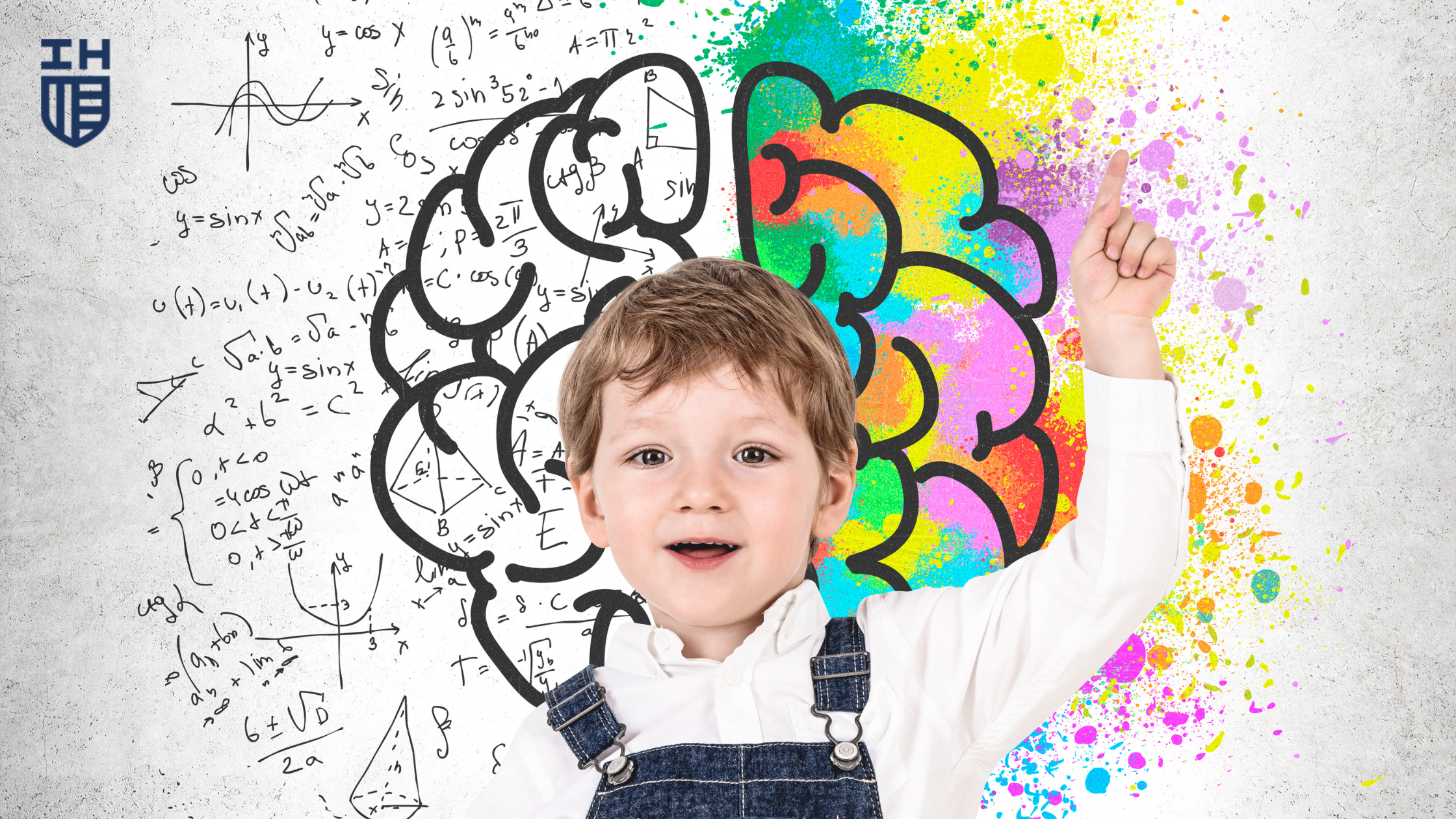
Cognitive theories of learning are the science behind how kids think, process information, and hold onto what they’ve been taught. These theories look at what’s happening inside the brain — not just whether a child got the right answer, but how they got there. And more importantly, whether that knowledge will still be there next week.
This isn’t just academic research locked away in journals. It’s deeply practical. When you understand how children learn best, you stop blaming your child for forgetting things, stop assuming they’re lazy, and start asking a much better question: Is the way we’re teaching actually matching the way their brain learns?
At Ivy Hall Academy, this question shapes everything we do.
What the Research Actually Tells Us
Here’s the core finding from decades of cognitive science: children don’t learn by receiving information. They learn by connecting new information to things they already know.
Jean Piaget, one of the most important thinkers in the history of education, showed us that kids build understanding the same way a construction crew builds a house — one layer at a time, on a solid foundation. His research demonstrated that children actively construct knowledge by relating new ideas to their existing mental frameworks, rather than passively absorbing what a teacher says. As Simply Psychology explains in their overview of Piaget’s theory, children are essentially “little scientists” — exploring their environment and building understanding through experience.
Researchers call this process constructivism — the idea that learners build meaning from experience. In plain terms: your child learns more from doing, exploring, and figuring things out than from sitting still and listening. The University of California, Berkeley’s GSI Teaching and Resource Center puts it plainly: knowledge is something learners actively construct based on their existing cognitive structures. Learning is relative to what a child already knows.
A second critical insight comes from research on metacognition. Many have described metacognition as “thinking about your thinking” — which simply means knowing how you learn. Research published in CBE Life Sciences Education found that students with strong metacognitive skills are positioned to learn more and perform better than peers who are still developing those skills. Children who can stop and ask themselves “Do I know what I don’t know?” and then identify what they don’t know and choose better strategies for learning it. That gap between recognizing something and truly understanding it… that’s exactly what was happening to my son at the kitchen table.
How do children learn best? The research is remarkably consistent: they learn best when they’re actively engaged, when the challenge is just a little harder than what they can already do, when they have a chance to reflect on what they just tried, and finally when they can apply that learning in new and novel ways.
What This Looks Like at Ivy Hall Academy
This is where the research stops being abstract and starts becoming something you can actually see.
At Ivy Hall, we’re a certified Leader in Me School, which means the 7 Habits of Highly Effective People aren’t a unit we teach once a year — they’re how our students operate every single day. Habit 2 is “Begin With the End in Mind.” This habit helps students do something that cognitive science says is one of the most powerful learning tools available: set a clear goal before you begin, and check your understanding as you go.
That’s metacognition in action. That’s a six-year-old learning to ask, “Wait — do I actually get this yet?”
We also use a mastery-based learning approach, which is built directly on cognitive theory. Our teacher teams support students individually to move forward only when they’ve genuinely understood the concept in front of them — not just completed the worksheet. This matters because cognitive science tells us that moving too fast before a foundation is solid creates a compounding problem. Every new concept that builds on shaky ground becomes harder to learn, not easier. National University’s overview of constructivism in education explains it well: students learn new concepts by building upon existing knowledge, with prior experience forming the foundation that everything else rests on. Our teachers are trained in and continue to improve their instructional practices, using Harvard’s Project Zero “Teaching for Understanding” framework, in order to support students in deep understanding, beyond knowledge acquisition.
When I watch our students at Ivy Hall work through a hard problem — pausing, trying again, asking a better question — I see Piaget’s theory alive in real time. That productive struggle, that good kind of hard, is exactly what makes knowledge stick.
What You Can Do at Home Tonight
The good news is that cognitive learning theory isn’t just for schools. Here are five things you can try with your child this week:
- Before your child starts homework, ask: “What do you already know about this topic?” — this helps their brain find the mental hook to attach new information to.
- When they say “I get it,” follow up with “Can you explain it to me like I’ve never heard it before?” — true understanding sounds different from recognition.
- Let them struggle a little longer than feels comfortable before you step in. The moment of figuring it out is where learning actually happens.
- After they finish studying, ask “How has your thinking changed through your work today?” not “Did you finish?” — reflection is where the brain consolidates what it just learned.
- Connect what they’re learning to something real in their life. “This is the same kind of thinking you use when you’re figuring out game strategy” — relevance dramatically improves retention.
Your child’s brain is an extraordinary learning machine. It just works best when we stop treating it like an empty container to fill and start treating it like a builder looking for the right materials.
We’d love to show you how that looks in our classrooms every day. Schedule a tour at Ivy Hall Academy and see cognitive learning theory in action — not on a whiteboard, but in the faces of students who know how to learn.

